
Plan a Trivia Night Fundraiser With Clear Cost and Attendance Goals
Calculate break-even attendance, ticket revenue, sponsorship income, and event expenses before committing to a venue and date.
A trivia night fundraiser can bring supporters together for an engaging evening while raising money for a nonprofit, school, sports team, church, or community group.
Guests register individually or in teams, answer several rounds of questions, and compete for prizes. Your organization may generate income through ticket sales, team tables, sponsorships, refreshments, donations, and fundraising products offered around the event.
The format is familiar and social. The financial result depends on venue costs, attendance, pricing, equipment, prizes, food, payment fees, promotion, and volunteer capacity. A full room can create useful proceeds and stronger community awareness. An event with weak advance sales may leave organizers covering fixed expenses with too few paid guests.

Find a Fundraiser That Fits Your Goal
Tell us about your organization, audience, timeline, volunteer capacity, and financial target. We will help you compare practical fundraising options for your group.
How a Trivia Night Fundraiser Works
Most events follow a straightforward sequence. The evening may include general knowledge, entertainment, sports, history, geography, music, picture rounds, or themes connected to your cause.
Build the event budget
Calculate break-even attendance
Choose a date and venue
Decide guest registration format
Plan the trivia rounds and rules
Recruit a host and volunteers
Promote and sell tickets in advance
Run the quiz and track scores
Calculate net proceeds and thank guests
The strongest format is not always the most elaborate one. Clear rules, balanced questions, reliable scoring, and smooth pacing usually matter more than a complicated structure.
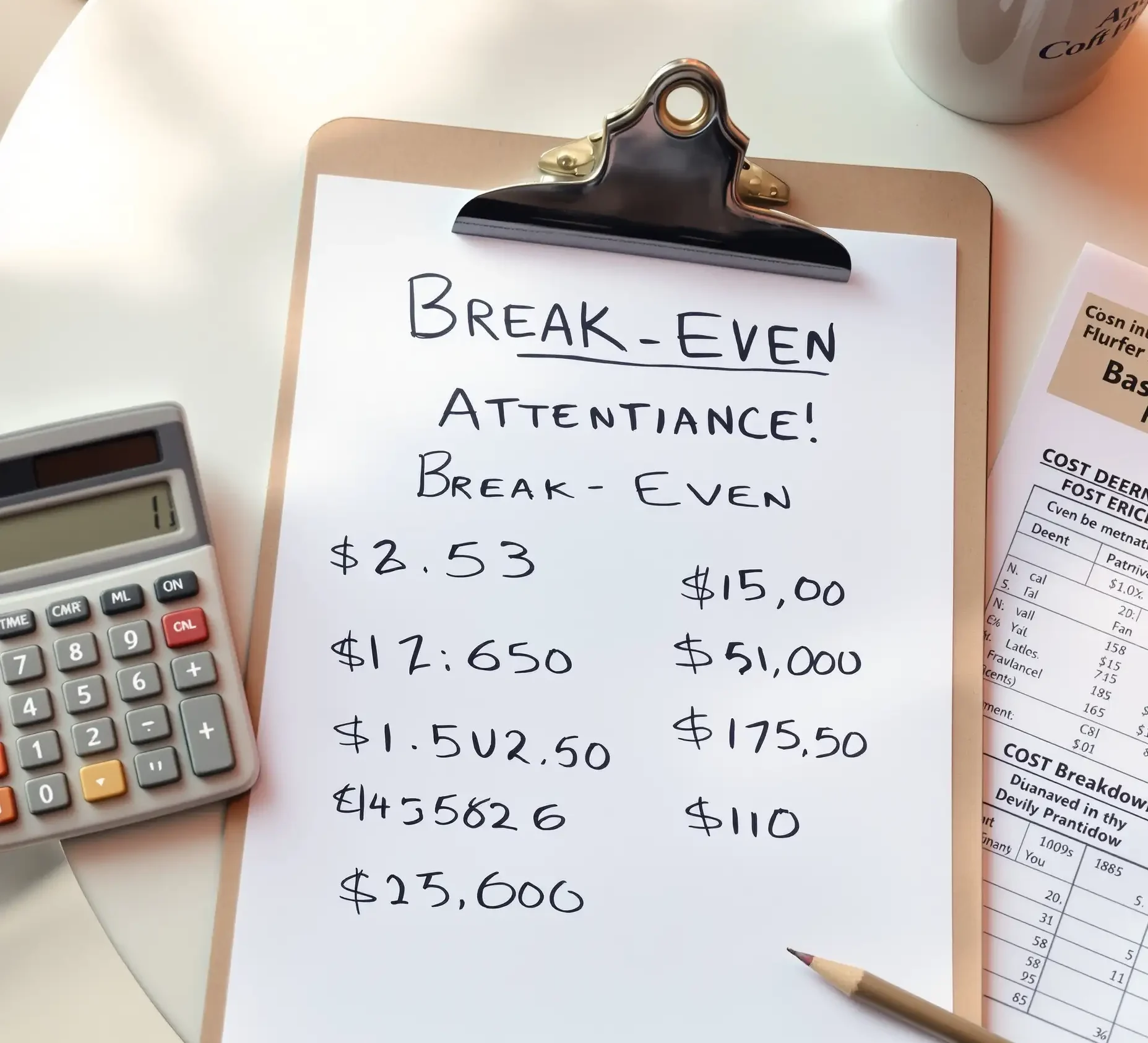
Calculate Break-Even Attendance First
Before booking the venue, determine how many paid guests you need before the event begins generating proceeds.
Start with fixed costs such as:
- Venue rental
- Host or trivia package
- Sound and display equipment
- Insurance
- Printing
- Decorations
- Prizes
- Setup expenses
Then add variable costs that increase with attendance:
- Food
- Beverage service
- Table supplies
- Payment-processing fees
- Per-person venue charges
- Participant materials
Break-Even Formula
Fixed event costs ÷ net ticket revenue per guest = break-even attendance
Example Calculation
$1,500
Fixed costs
$30
Ticket price
$10
Variable cost per guest
$20
Net revenue per guest
$1,500 ÷ $20
75 paid guests to break even
Estimate Net Proceeds
Ticket revenue + sponsorships + donations + other income – total expenses = estimated net proceeds
Only include confirmed sponsorship income in the working budget. An interested sponsor has not yet committed.
Calculate the attendance, ticket revenue, sponsorship income, and average contributions your event may need after expenses.
01
Flexible Entry
Individual Tickets
Individual tickets make the event accessible to guests who do not already have a team.
Individual registrants can be placed at open tables or grouped into a team for solo attendees.
This broadens participation but requires a clear seating process.
02
Advance Revenue
Team or Table Registration
Selling full tables can improve advance revenue and simplify event planning.
Options may include:
- Individual admission
- A table for six
- A table for eight
- A sponsored business table
- A premium table with added benefits
Team registration also encourages guests to invite friends, relatives, coworkers,
or community contacts.
03
Build Momentum
Early Registration
An early-registration deadline can create momentum and provide a more reliable attendance estimate.
Keep the pricing structure simple and make every event listing easy to understand.
Event Listing Checklist
Clearly state these details before registration opens:
Ticket price
Team size
What admission includes
Registration deadline
Refund or transfer policy
Venue details
Start and finish time
Accessibility information
How the proceeds will be used
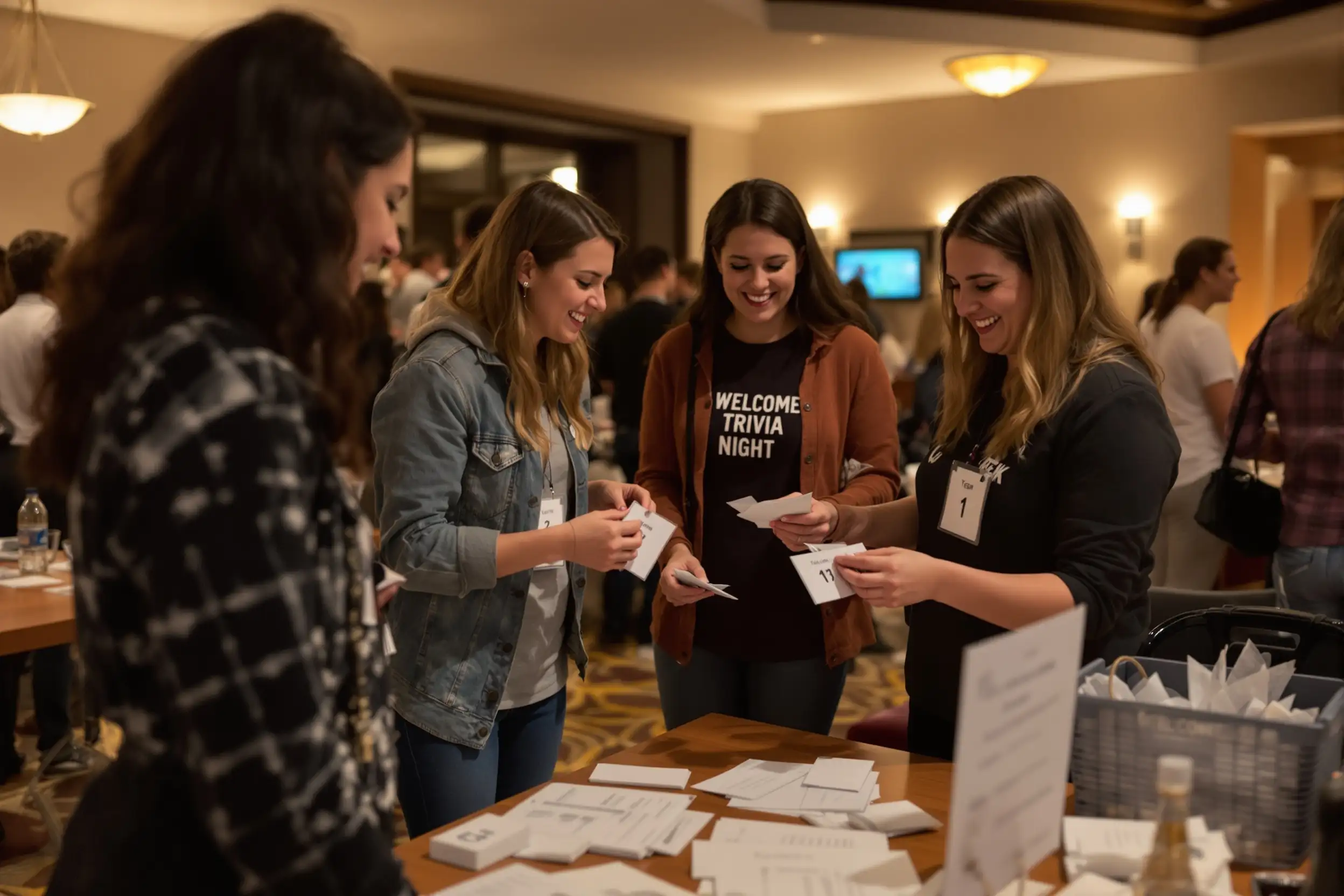
Sell Tickets Before Event Night
Advance Promotion Matters
A trivia fundraiser depends on advance sales. Promotion should begin several weeks before the event.
Promotion channels may include:
- Social media
- Community calendars
- Board and volunteer networks
- Local businesses
- Partner organizations
- School or team apps
- Newsletters
- Printed flyers
- Sponsor channels
Promote the experience and the cause
Instead of saying only “Join our trivia night,” use a message that connects attendance to a clear result.
“Join our trivia night fundraiser and help fund new resources for our community literacy program.”
Advance payment can reduce casual reservations and provide a more dependable attendance forecast.
- Send a confirmation after registration
- Share parking and arrival details
- Send a reminder one week before
- Send a final reminder one or two days before
- Publish the event timetable
- Confirm team names
- Provide a clear ticket-transfer policy
Some supporters may want to help but cannot attend the event. Our online fundraising tools can support campaign sharing, contribution collection, and progress toward the financial goal.
Online Fundraising for Remote Supporters
Start an Online Fundraiser
Supporters who cannot attend in person may still want to contribute. Share a campaign link through email, social media, and team or school networks. Track progress toward your goal and send updates that show how every contribution helps.
Good questions should create discussion and friendly competition without making most guests feel lost.
A balanced event may include:
General knowledge
Entertainment
History
Sports
Geography
Science
Food and culture
Local topics
Picture rounds
Music rounds
Use a mix of easier, moderate, and more challenging questions. Avoid making every round highly specialized unless the event is intentionally niche.
Keep the Format Consistent
- Five to eight rounds
- Eight to ten questions per round
- A short break midway through the evening
- One final round
- One or more tiebreakers
Guests Should Understand
- Team-size limits
- How answers are submitted
- Whether phones are allowed
- How long teams have to answer
- How scores are calculated
- How disputes are handled
- How ties are resolved
Review Every Question Before Event Night
- Accuracy
- Clear wording
- One defensible answer
- Suitable difficulty
- Audience relevance
- Regional context
- Unintended ambiguity
- Duplicate content
For mixed U.S. and Canadian audiences, avoid assuming every guest shares the same regional knowledge unless the category is clearly labeled.
The host shapes the pace and tone of the evening. A professional host may provide questions, equipment, presentation support, or event experience. A confident volunteer may reduce costs but will need time to prepare and rehearse.
Compare Host Options
- Cost
- Question preparation
- Equipment requirements
- Audience interaction
- Event pacing
- Scoring support
- Setup time
- Backup planning
A volunteer host should receive the complete question set, answer key, rules, schedule, pronunciation notes, and tiebreakers before event night.
Keep Scoring Reliable
Scoring may use paper answer sheets, digital tools, or a combination of both. Do not ask the host to manage every score while also reading questions and maintaining the room's energy.
- Clearly numbered answer sheets
- A dedicated scoring team
- A visible round schedule
- Tested score calculations
- Spare pens and paper
- Backup copies of questions
- A dispute process
- Tested tiebreakers
A trivia night often requires more coordination than a single event lead can manage alone. Clear assignments reduce confusion and keep the evening on schedule.
Useful roles include:
- Event lead
- Host or quizmaster
- Registration lead
- Payment lead
- Seating volunteers
- Scorekeeping team
- Audio-visual lead
- Timekeeper
- Floor volunteers
- Sponsor coordinator
- Prize coordinator
- Setup and cleanup team
At a smaller event, one person may cover more than one responsibility. Every job should still have a named owner.
Arrive early and run through every system. A technical failure during the first round can deflate the room's energy.
- Microphones
- Speakers
- Projectors or screens
- Slides
- Music and video clips
- Digital scoring
- Internet access
- Payment devices
- Lighting
- Seating layout
Keep printed questions and answer keys available in case the presentation system fails.
Review goal-setting, volunteer planning, supporter communication, and campaign timing before your trivia night. Our free fundraising guide covers the essentials.
Get the Free Fundraising GuideAdmission does not need to be the only source of income. A few focused additions can increase visibility and total proceeds without making the event difficult to manage.
- 01Sponsored rounds
- 02Business-team tables
- 03Matching donations
- 04A visible donation goal
- 05Digital giving through a QR code
- 06Refreshment sales
- 07Fundraising products
- 08Sponsor-supported prizes
- 09A brief cause appeal between rounds
- 10Contributions from non-attendees
Local businesses may sponsor a round, table, category, prize, or the full event. Confirm every commitment in writing and keep sponsor benefits clear. Any raffle, gaming activity, alcohol sale, or tax-receipt claim should be reviewed under the rules that apply in your state, province, municipality, venue, and organization.
A trivia night may support community programs, outreach, educational services, local assistance, equipment, program delivery, and facility needs.
Connect the event to one clear impact statement so attendees understand what their support will make possible.
View Nonprofit Fundraising Ideas
Schools may use a family trivia event or an adult evening to support classroom resources, libraries, field trips, student clubs, arts and enrichment, and PTA or PTO projects.
Questions should suit the expected audience, and school approval requirements should be confirmed before promotion begins.
View School Fundraising Ideas
Sports-themed rounds can help teams raise money for uniforms, equipment, travel, registration, tournament fees, and facility expenses.
Invite local businesses, former players, families, and supporters to register full tables. The social atmosphere encourages attendance and builds community around the team.
View Sports Fundraising IdeasA trivia night may be a good fit in some situations. Another format may work better in others.
A trivia night fits when your organization wants:
- A social community event
- Advance ticket revenue
- Sponsor participation
- Volunteer involvement
- Cause awareness
- Repeat-event potential
Another format works better when:
- Venue costs are too high
- Ticket demand is uncertain
- Volunteers cannot support the logistics
- Supporters are spread across several locations
- The organization needs a longer campaign window
- One evening is unlikely to meet the goal
Fundraising options that can extend beyond the event:
Online fundraising
Product fundraising
Direct-sale programs
Order-taker campaigns
Card-based fundraising
Custom and personalized products
Why Organizations Work With Us
We help nonprofits, schools, teams, churches, and community groups compare fundraising options with clearer expectations.
We focus on practical questions:
?
How much do we need to raise?
?
What costs should we expect?
?
How many supporters need to participate?
?
How much work can our volunteers manage?
?
Which format fits our timeline?
?
How can people contribute online?
?
Which programs are available in the United States or Canada?
?
Where can we get help?
When a trivia night fits, we help you approach the event with a clearer financial and operational plan.
When another format makes more sense, we help you compare available fundraising options.
Start With Clear Cost and Attendance Goals
A trivia night fundraiser can create community connection, cause awareness, and useful proceeds when the budget, attendance target, questions, and volunteer roles are clear. We help you compare fundraising options around your timeline, location, and financial target.