
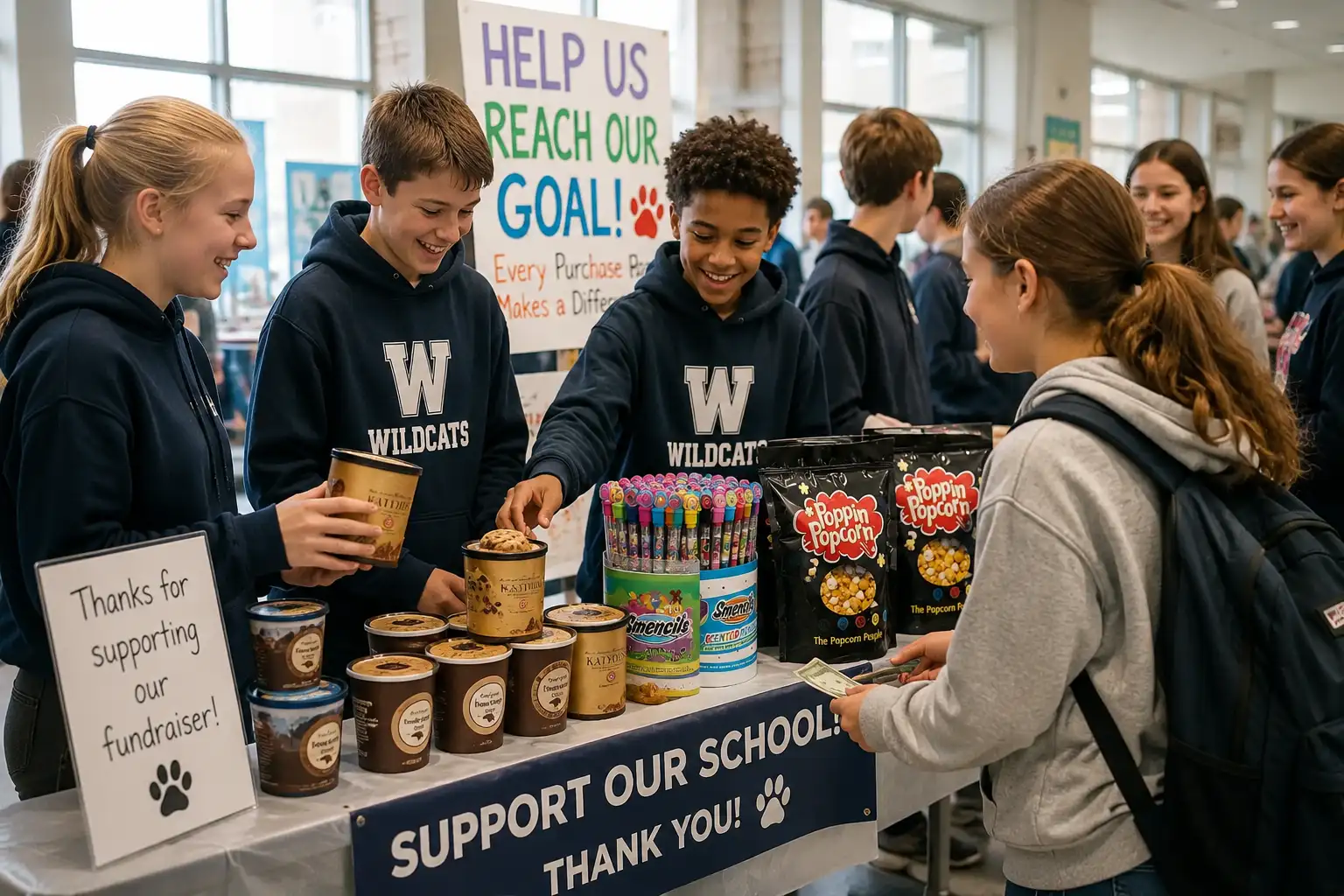
Discover Top Fundraising Ideas for Schools Today
Unlock innovative fundraising ideas to elevate school programs, enhance student experiences, and foster community engagement
If you’re responsible for fundraising for football, you’re likely trying to solve a very specific problem on a season deadline: equipment and uniforms need replacing, travel costs add up quickly, and registration fees don’t always cover the full year.
Football fundraising also competes with the busiest stretch of the calendar. Practices run late. Games take over weekends. Families are juggling school schedules and multiple commitments. Even when you choose a solid fundraiser, it can lose steam halfway through if participation drops or the organizer workload becomes too heavy.
This guide covers practical options for fundraising for football teams that are easier to run, easier to explain, and more likely to stay organized from kickoff to close—across the United States and Canada.
Football teams rarely struggle with motivation. They struggle with coordination.
Most campaigns derail for predictable reasons:
Payments come in through multiple channels with no clean tracking
Families aren’t sure what to do after the first message goes out
A long campaign loses momentum after week one
Distribution and delivery turn into a separate project
One organizer ends up doing everything
The goal is to choose a format that matches your team’s capacity and gives you a simple plan for participation, deadlines, and follow-through.
Before selecting from a long list of football fundraising ideas, answer three questions. They’ll narrow your options quickly.
Football budgets tend to cluster into:
Gear and equipment: helmets, pads, practice tools
Uniforms and spirit wear: jerseys, warmups, sideline gear
Travel and tournaments: buses, hotels, meals, entry fees
Scholarships and team support: helping families who need assistance
If the costs are big-ticket (equipment or travel), aim for a higher-yield format or a combined plan (product fundraising plus sponsorship).
10–21 days: online-first campaigns or structured product fundraising
3–6 weeks: product fundraising plus a simple sponsor plan
Weekend-based: event fundraisers (best when staffing is reliable)
Low bandwidth: minimize handoffs, tracking, and distribution
Moderate bandwidth: structured product fundraising with clear deadlines
High bandwidth: events can work well with clear roles and a tight scope

Instead of stacking a long list, the options below are grouped by how they run—so it’s easier to choose based on your season schedule and organizer bandwidth.
Product fundraising works well for football because supporters understand the value exchange immediately: they buy something, and the team earns a portion toward its goal. That structure also makes it easier to set deadlines and keep the campaign moving.
A reliable choice when families can sell through work, neighbors, and extended networks. Works best with a short selling window and clear communication about close dates and delivery expectations.
Best for: straightforward campaigns with a clean start and end.
Gift-friendly and widely understood. A strong fit when you want broad appeal and a fundraiser supporters can say yes to quickly.
Best for: wide community participation with a simple pitch.
Good for faster transactions and simpler selling mechanics. Runs smoother when you keep the campaign window short and avoid reordering complexity.
Best for: quick selling with fewer administrative steps.
Football programs often have strong identity, which makes spirit wear effective—especially around season start, rivalry games, or playoff runs. Keep it focused: limited items, clear sizing, one ordering deadline, one delivery method.
Best for: programs with strong local visibility and supporter pride.
Why product fundraisers work: predictable structure helps families participate without guessing what to do next.
Online-first fundraising is a strong fit when you want fewer handoffs, less cash handling, and simpler participation—especially helpful when supporters are spread across provinces or states.
Keep the goal specific: “new helmets,” “travel to playoffs,” or “player scholarships.” A short window plus one mid-campaign progress update is often enough to maintain momentum.
Best for: fast fundraising needs with minimal distribution.
Works best when the ask is simple and repeatable. Provide one message template, a shared team goal, and a consistent deadline so the campaign doesn’t drift.
Best for: broad participation without complicated logistics.
Reduces sorting, storage, and scheduling issues. Also expands your reach when out-of-town family members want to support the team.
Best for: limited volunteer bandwidth or distributed supporter networks.
Why online-first works: fewer manual steps typically means less burnout and steadier participation through the finish.
Football has something many sports don’t: natural community attendance. Tailgates and home game crowds can make certain fundraisers more effective—if the execution stays clean.
Some teams run concessions internally; others partner with local vendors and set a profit share. Decide in advance who handles staffing, money, and weather-related changes.
Best for: programs with reliable home attendance and consistent volunteers.
A weekend clinic can raise funds and build goodwill. Keep registration simple, cap attendance, and assign clear staffing roles.
Best for: programs with coaches and older players who can lead instruction.
Works when promoted well and run in a tight window. Pair it with a simple online option for supporters who can’t attend.
Best for: teams with strong community base and a clear promotional plan.
Prize-based fundraising can be popular, but requirements can vary by state/province. Confirm local rules and keep the process transparent before launch.
Best for: programs with clear compliance comfort and strong community participation.
Why game-day/community ideas work: attention is already there—success comes from capturing it without cash-handling chaos.

If you’re funding equipment upgrades, travel, or scholarships, sponsorship often becomes the difference-maker. Sponsorship becomes easier when it’s packaged clearly.
Keep tiers limited and fulfillable:
Logo on a team page or printed schedule
Sponsor recognition at one event (clinic, game, banquet)
A defined set of thank-you posts
Banner placement for a specific period
Best for: teams with a few parents comfortable doing outreach.
Tangible categories make the ask easier for businesses to understand and support.
Best for: programs funding equipment where the purpose is easy to explain.
Ask businesses to run a short “round up your purchase” window with a clear start/end date and a one-page explainer.
Best for: strong community relationships and short fundraising timelines.
Why sponsorship helps: it scales revenue without relying entirely on each family’s selling effort—especially when paired with a core fundraiser.
Shorter campaigns often outperform longer ones because urgency stays intact and participation doesn’t fade.
Choose one fundraiser type and one goal
Assign roles: coach lead, organizer, communications helper
Send one kickoff message with clear participation steps
Provide one repeatable script families can copy/paste
Send one mid-week update (current total + reminder + deadline)
Share one “what this funds” message (helmets, travel, scholarships)
Encourage each family to share with a short list of contacts
A clean close is what makes fundraising easier to repeat next season.
Football fundraising runs smoother when it’s structured and easy to manage. The most common friction points are predictable: participation becomes uneven, tracking gets messy, and logistics eat up time that should be going toward the season.
Fundraising.com supports teams across the United States and Canada with fundraising options designed to fit different team sizes and timelines, including online-friendly approaches that reduce manual work. The practical advantage for organizers is a clearer workflow: campaigns that are easier to launch, easier for families to share, and easier to manage without creating an extra administrative burden.

Short online donation drives, ship-to-home fundraising, or product fundraisers with clear deadlines and a simple plan tend to be the easiest to run.
Higher-yield outcomes often come from structured product fundraising, sponsorship packages, or a combined plan where sponsorship supports a core fundraiser.
Short campaigns (10–21 days) perform better when the goal is specific and families have a repeatable message script to share.
Teams often raise equipment funds through a product fundraiser or sponsorship packages tied to specific needs. Specific goals make the fundraiser easier for supporters to understand.
Yes. Online-first fundraising and ship-to-home models can help when supporters are spread out geographically and you want fewer in-person handoffs.
Start with your goal, choose a format that matches your volunteer bandwidth, and keep the timeline short enough to maintain momentum. When participation is simple and tracking is organized, fundraising becomes easier to run—and easier to repeat.
Fundraising.com
11320 State Route 9 #701065, Champlain, NY 12919
info@fundraising.com
1.800.443.5353
Related Posts
Unlock innovative fundraising ideas to elevate school programs, enhance student experiences, and foster community engagement

If you’ve ever led PTO fundraising, you already know the hard part isn’t coming up

If you’re responsible for fundraising for football, you’re likely trying to solve a very specific